


The System Behind cult Ninja’s Scale

01The Premise
cult Ninja was built around a simple idea: recognise members when they reached a milestone in their fitness journey. What started as a small pilot soon had to work across multiple centres, teams and cities. That exposed a different kind of product problem.
In our initial five-centre pilot, close operational oversight helped us reach 75% adherence. When we took the same process across Delhi, adherence fell to 50%.
The problem wasn’t that people didn’t care about the ritual. The process had too many handoffs, limited auditability and no clear ownership of the next step.

02When Handoffs Start to Break
The first version of the process was simple.
Thirty minutes before a GX class, the Centre Manager received a list of eligible members and handwrote their names on individual certificates. The certificates were then handed to the trainer, who announced the achievers at the end of the class and marked the task complete in the app.
It worked when we had close oversight.
But as we expanded, the handoff itself became the weak point.
Centre Managers said they had passed the certificates on. Trainers said they hadn’t received them. Without a reliable audit trail, there was no clear way to know where the process had broken down.
The problem wasn’t that people couldn’t execute the ritual.
That told us we needed to change the operating model before we tried to automate it.
03We Started With Ownership, Not Automation
The first change was simple: remove the handoff.
We moved to a single-stakeholder process and replaced handwritten certificates with a pre-printed Letter of Appreciation. We redesigned the product workflow around that new operating model. With one owner responsible for the full flow, there was no disputed handoff where accountability could disappear.
The new format wasn’t just easier to fulfil. We wanted the recognition to feel earned. “Earned, Not Bought” became part of the Letter of Appreciation, reinforcing that the status came from the member’s effort.
The standardised format also reflected a first-principles view of the psychology: the status mattered more than personalisation. We looked at examples where standardised finisher badges still carry value because what matters is earning the status, not having a customised piece of paper.
We were also faced with a choice about how quickly to roll it out. The usual approach was to run another 10-centre pilot. We treated the process change as a reversible Type 2 decision: if the numbers stalled, we could change course without a permanent downside.
04Making the Ritual Auditable
As the programme moved into trainer operations, we ran into another problem: we were measuring whether a task was marked complete, not whether the recognition had actually happened. Cluster Managers were tracking the “% App Tasks Marked” metric, and trainers could mark a task complete without physically distributing the reward.
So we changed what the system could prove. Trainers could mark a task complete only during the 40–55 minute class cooldown window, which pushed on-time completion from 60% to 90%. Members also received an in-app confirmation prompt, so an unconfirmed recognition could be flagged rather than disappearing into the system.
We added structured reasons for exceptions and used random video checks alongside live audits to understand where execution was breaking down. Together, these gave us a much clearer picture of what was actually happening on the ground.
05Keeping the Ritual Alive
As the programme matured, another problem emerged.
Early on, enough members were reaching the milestone that recognition happened frequently. But as that initial pool became smaller, new members had fewer opportunities to see the ritual. Awareness started to fade with it.
We needed to create more opportunities for recognition without changing what cult Ninja stood for.
Half-Ninjas gave trainers a way to recognise members halfway through the journey, keeping the ritual visible during regular classes. We also began celebrating members who had broken their routine and successfully rebuilt it.
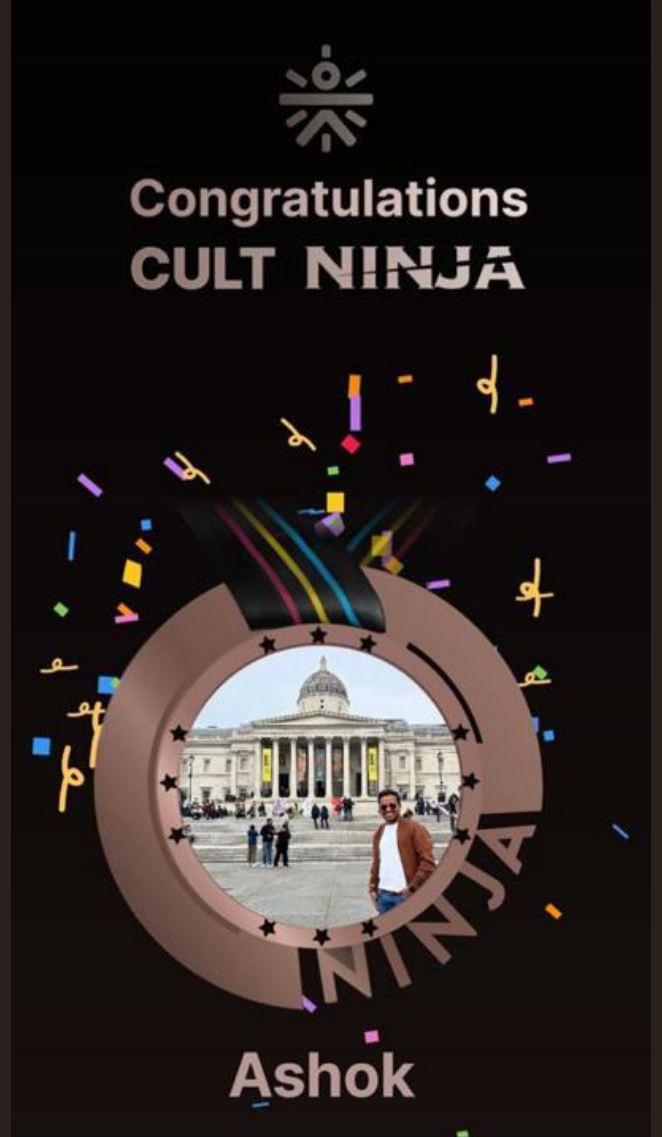
Members were also starting to share their cult Ninja achievements and stories on social media. We brought some of that organic momentum back into the app through a feed of member stories.
The product was no longer relying on a single milestone to keep the idea alive.
06We Discovered a Second Behaviour Loop
We started cult Ninja to change member behaviour, but the system also started changing the behaviour of the people delivering it.
The member loop was straightforward: show up, build consistency, get recognised, and keep going. Behind the scenes, trainers were developing a loop of their own: identify, prepare, recognise, repeat.
As we introduced more ways to keep the recognition ritual going, from full cult Ninja celebrations to Half-Ninjas and Habit Reformer recognitions, trainers were repeatedly identifying members, preparing for recognition and celebrating them in class. That repetition gradually became a habit for the teams delivering the experience.
The result was an unexpected operational benefit. Embedding these recurring recognition rituals into class routines improved trainer SOP compliance and made the process more consistent. The separate time-gated marking workflow also helped reduce false app logging and improve execution quality.

07What Scaling Taught Us
Scaling cult Ninja taught us that the recognition ritual needed a strong system around it. Clear ownership made the process more reliable. Better measurement showed us whether recognition actually happened. Deliberate workflows gave trainers enough structure to repeat the ritual consistently while keeping their own voice.
It also took a cross-functional effort to make that happen. The work brought together product, tech, data, centre operations, trainers and centre teams, with each group solving a different part of the problem. Together, they built a process that could identify the right members, prepare trainers for recognition and make the celebration happen consistently in class.
08The Human Part Was the Point
cult Ninja started with a simple product question: how do we make consistency visible enough for members to believe in it?
Scaling the programme showed us everything that had to happen around that idea for the recognition to work reliably.
The systems, workflows and governance weren’t the experience themselves. They existed to protect the experience as it grew.
If you want to go back to the product thinking that started cult Ninja, read Part 1: How cult Ninja Made Consistency Feel Real.
More from
Engineering
category


